

The 3 Essential Elements of Great Wildlife Photography
Photography is all about creating images with light. This is just as true in wildlife photography, where light determines all the settings needed to capture a successful image.
Unfortunately, we have no control over the light, so we have to work with the quality and quantity available to us.
That said, there are certain elements we can control to give ourselves the best possible chance of capturing great wildlife photographs.

1. GET AS CLOSE AS POSSIBLE TO YOUR SUBJECT'S EYE LEVEL
In my opinion, this is the most important element of wildlife photography. When we photograph an animal from a position that is significantly above or below it, the image often lacks a sense of connection with the subject.
Instead, when we get down to the animal's eye level, we feel as though we are stepping into its world, resulting in a much more natural-looking photograph.
Being at eye level and establishing direct eye contact with your subject can truly make the difference between an ordinary image and a great one.
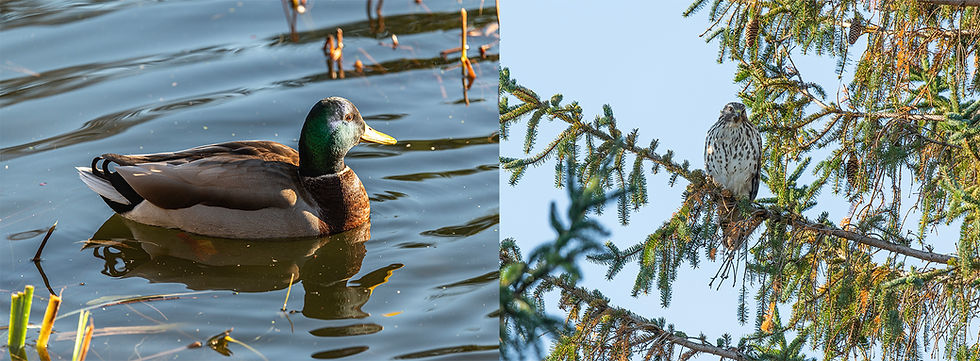
Notice the difference between these two images. The one on the left was taken from above, which doesn't give us the feeling of being invited into the subject's world. The one on the right was taken from below, but we still don't have the right eye contact or the artistic sense of intimacy that comes with photographing an animal at eye level.
The next images clearly demonstrates the difference. By getting down to the subject's level, the photograph creates an entirely different feeling and allows us to connect more deeply with the animal.

2. PAY ATTENTION TO THE SURROUNDING LANDSCAPE
In wildlife photography, we often focus so much on our main subject that we sometimes forget about everything around it.
Pay attention to the background and the animal's surroundings. A cluttered background can easily distract the viewer from your subject. Before taking the shot, take a moment to check your composition for distracting elements or overly bright, dominant colours.
On the other hand, natural elements can also enhance your subject, such as lichen or moss growing on a branch, an autumn-coloured background or beautiful snow-covered conifers.
I truly believe that in wildlife photography, the environment in which an animal lives is just as important as the animal itself.

3. WHEN USING A HIGH ISO, LOOK FOR A BRIGHT BACKGROUND
Using a low ISO is one of the key elements in reducing noise and preserving detail in our photographs. However, don't be afraid to increase your camera's ISO, especially when shooting wildlife.
A sharp image with some noise will always be better than a blurry image caused by using an ISO that is too low.
When possible, try to find a bright background or one with a similar brightness to your subject rather than a dark background. This will help make the noise generated by a high ISO virtually unnoticeable.
And that's it! I hope these simple, easy-to-apply tips will help you improve your wildlife photography. Happy shooting!

Looking to improve your photography skills and knowledge? Discover my one-on-one photography mentoring through my individual photography workshops!
🧡 Have you considered liking this blog post? If you haven't already, thank you in advance for showing your appreciation for the free content I share with you on a daily basis. Feel free to leave a comment below. Your questions, suggestions and opinions are always welcome!
Want to find all my blog posts and other interesting content on Pinterest? Simply follow me by clicking here! To save the Pinterest pin for this blog post to one of your boards, simply click on one of the images below.




Comments